# RHEL-9 Migration

1. **What is the reason for this maintenance?**

   Oscar's current operating system, RHEL-7, and its maintenance support phase will come to an end in June 2024. So Oscar is being upgraded to latest RedHat Enterprise Linux RHEL-9.2

   <div data-gb-custom-block data-tag="hint" data-style="info" class="hint hint-info"><p>Due to the new kernel and glibc majority of applications will break.</p></div>
2. **We are also introducing a bunch of new features:**

   * **Upgraded OS -** The OS has been upgraded with a newer kernel and improved security patches
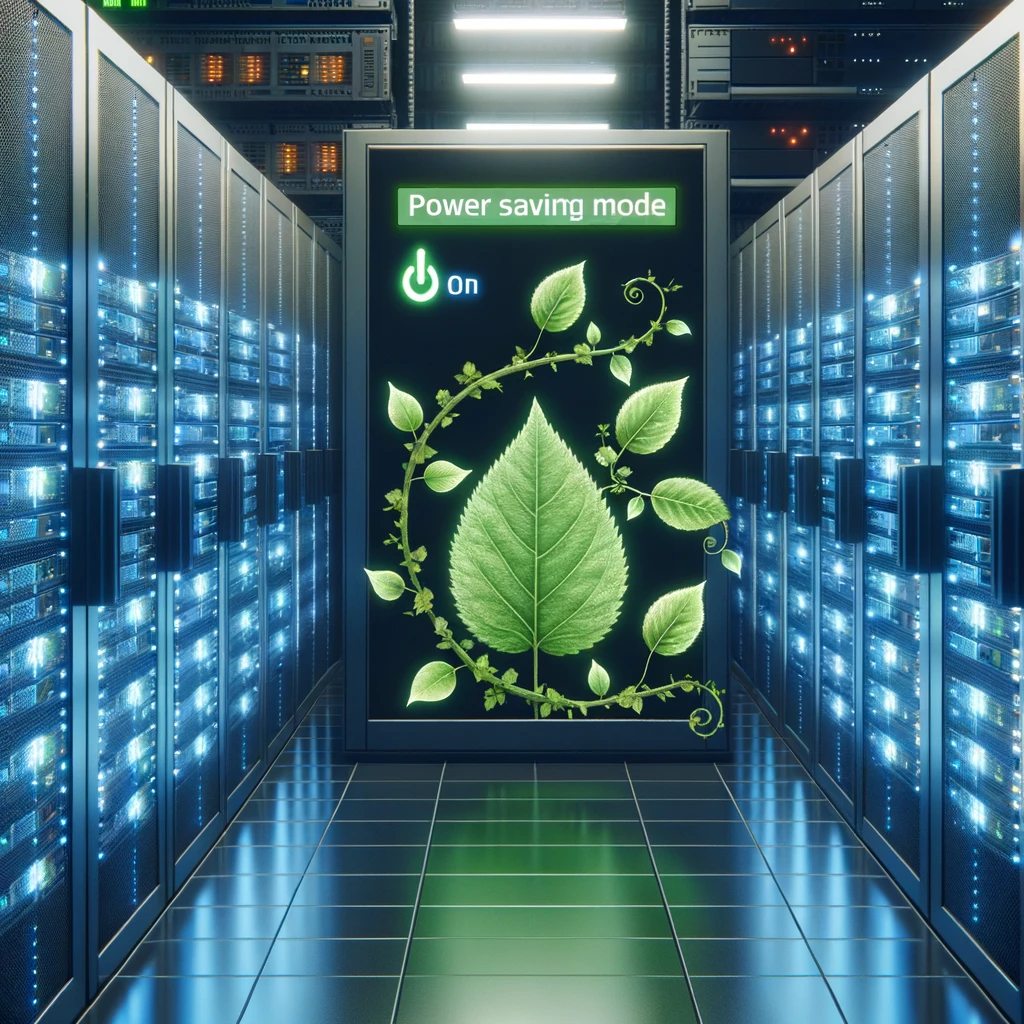
   * **Power Saving Mode:** In the batch partition, idle nodes now enter a power-saving mode, consuming only about 40W. They seamlessly transition to high-performance mode just before job execution begins
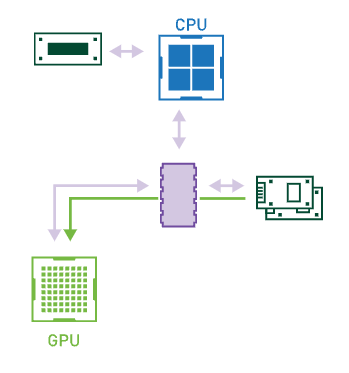
   * **GPU Direct Storage:** GDS enables a direct data path for direct memory access (DMA) transfers between GPU memory and storage, which avoids a bounce buffer through the CPU. This direct path increases system bandwidth and decreases the latency and utilization load on the CPU
   * **SLURM Upgrade:** We have tuned the scheduler to provide much higher throughput. Now supports `json` and `yaml` formatting for all slurm commands
   * **SPACK & LMOD -** Newer industry standard for installing and managing applications on Oscar. We now support multple shells `bash,zsh & fish` etc
   * **Increased-core core count for GPU accounts:**

   <table><thead><tr><th width="226">Account</th><th width="100">Partition</th><th>Current core-limit</th><th>New core-limit</th></tr></thead><tbody><tr><td>Exploratory</td><td>gpu</td><td>4-cores</td><td>12-cores</td></tr><tr><td>Standard GPU Priority</td><td>gpu</td><td>16-cores</td><td>24-cores</td></tr><tr><td>Standard GPU Priority+</td><td>gpu</td><td>32-cores</td><td>48-cores</td></tr><tr><td>High-End GPU Priority</td><td>gpu-he</td><td>16-cores</td><td>24-cores</td></tr></tbody></table>

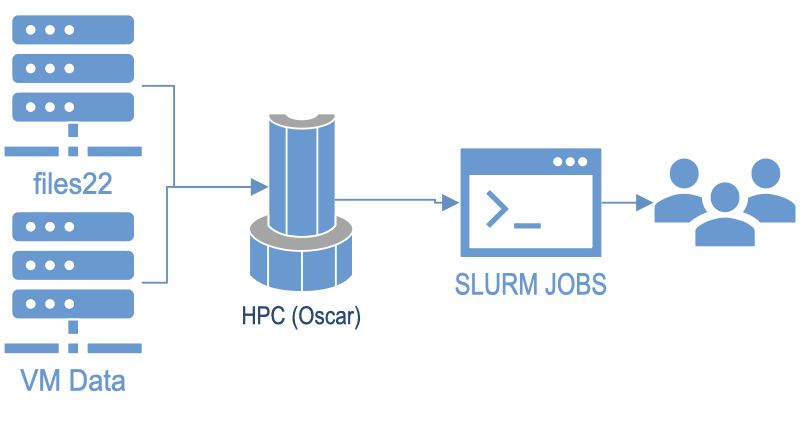
   <div align="left"><figure><img src="/files/83aqCmOBErvykqsapWZk" alt="" width="375"><figcaption><p>Idle nodes enter power saving mode automatically</p></figcaption></figure> <figure><img src="/files/32Vq2t70DTpOOFe7lFVM" alt=""><figcaption><p>Unified Storage across all OIT data platforms</p></figcaption></figure> <figure><img src="/files/LAX4aj2rHlIieGB2Vn8n" alt=""><figcaption><p>GPUDirect Storage - Lower laency &#x26; Higher Bandwidth for IO</p></figcaption></figure></div>
3. **What are exact version changes?**

   <table><thead><tr><th width="199.33333333333331">Component</th><th width="300">Current Version</th><th>New Version</th></tr></thead><tbody><tr><td>Operating System</td><td>RHEL-7.9</td><td>RHEL-9.2</td></tr><tr><td>Kernel</td><td>3.10.0-1160.76.1</td><td>5.14.0-284.11.1</td></tr><tr><td>GLIBC</td><td>2.17-326</td><td>2.34-60</td></tr><tr><td>SLURM</td><td>22.05.7</td><td>23.02.6</td></tr><tr><td>Nvidia Driver</td><td>535.54.03</td><td>535.113.01</td></tr><tr><td>Package Manager</td><td>PyModules</td><td>SPACK</td></tr></tbody></table>
4. **How to access the new cluster?**

   We will provide detailed instructions in coming weeks. Thank you for your patience.


---

# Agent Instructions: Querying This Documentation

If you need additional information that is not directly available in this page, you can query the documentation dynamically by asking a question.

Perform an HTTP GET request on the current page URL with the `ask` query parameter:

```
GET https://docs.ccv.brown.edu/oscar/sys-changes/rhel-9-migration.md?ask=<question>
```

The question should be specific, self-contained, and written in natural language.
The response will contain a direct answer to the question and relevant excerpts and sources from the documentation.

Use this mechanism when the answer is not explicitly present in the current page, you need clarification or additional context, or you want to retrieve related documentation sections.